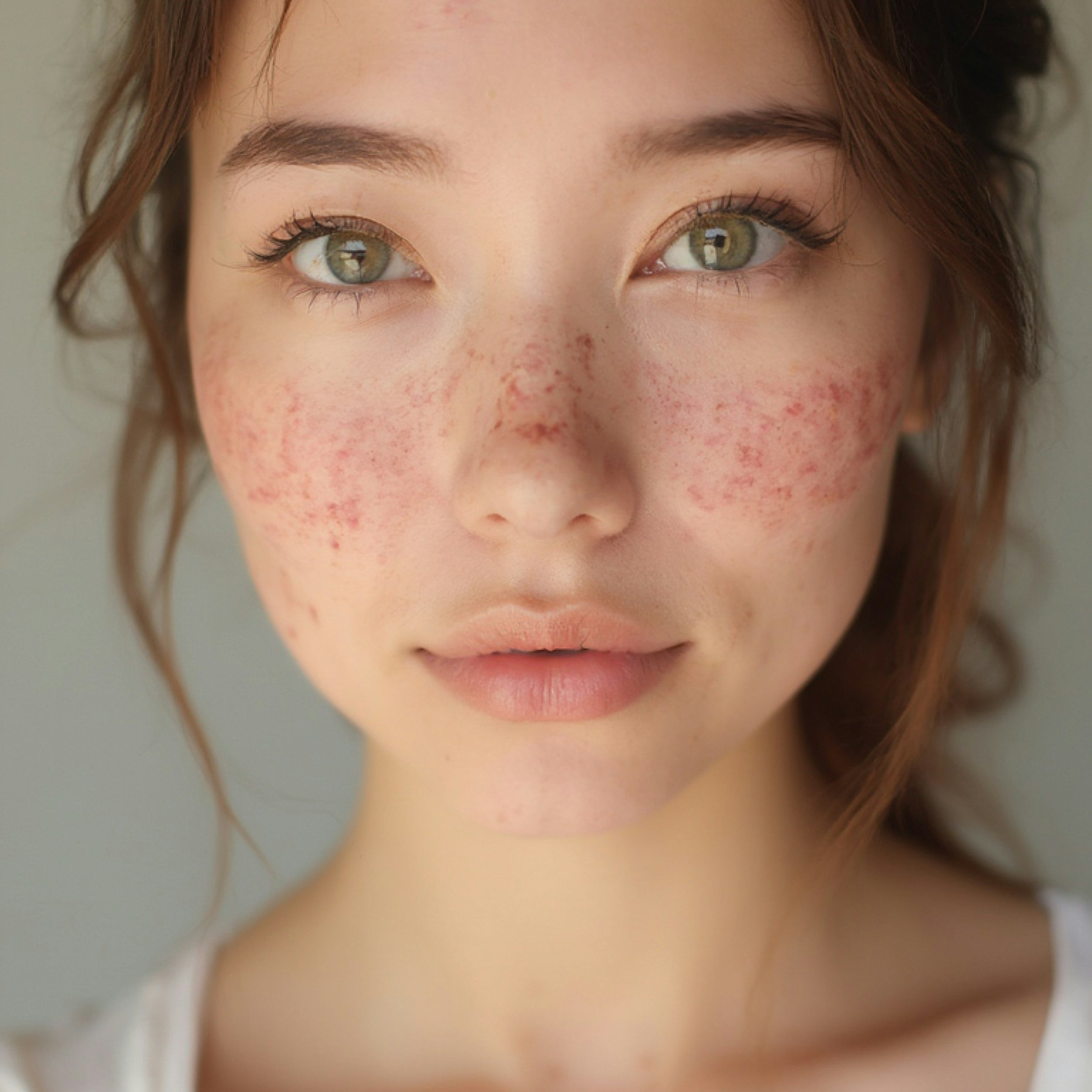

Rosacea Treatment in Germantown, MD
If your face flushes easily, stays red, or breaks out in bumps that don't respond to acne products, you may have rosacea. It is a common and often misunderstood condition, but it can be managed. At Divergent Dermatology, board certified dermatologist Dr. Qaren Quartey will help you understand what's going on with your skin and create a plan to calm it.
What is rosacea?
Rosacea is a chronic inflammatory skin condition that mainly affects the central face, including the cheeks, nose, forehead, and chin. It tends to flare and fade over time. Rosacea is not caused by poor hygiene and is not contagious.
Common signs include:
Frequent flushing or blushing
Persistent redness in the center of the face
Visible small blood vessels
Red bumps or pimples (sometimes mistaken for acne)
Burning, stinging, or sensitive skin
Dry, rough skin
Eye symptoms such as dryness, irritation, redness, or a gritty feeling (ocular rosacea)
In some people, thickening of the skin on the nose over time
Rosacea is often missed in people with darker skin. Redness can be harder to see on skin of color, so rosacea may go undiagnosed or be mistaken for other conditions. Other signs, such as warmth, burning, bumps, and flushing, are important clues. Dr. Quartey is experienced in recognizing rosacea on all skin tones.
Common rosacea triggers
Triggers differ from person to person, but frequent ones include:
Sun exposure
Hot or spicy foods and hot beverages
Alcohol
Heat, such as saunas, hot showers, and warm weather
Cold wind
Emotional stress
Strenuous exercise
Certain skin care products and cosmetics
Some medications
Identifying your personal triggers is an important part of managing rosacea.
How we approach treatment
Rosacea can't be cured, but it can be controlled. Treatment depends on your symptoms, and Dr. Quartey may recommend:
Gentle skin care and daily sun protection: a consistent routine to protect the skin barrier and reduce irritation
Prescription topical treatments: to reduce redness, bumps, and inflammation
Oral medications: for moderate to severe or more inflammatory rosacea
Light and laser treatments: Referral for laser treatment to reduce visible blood vessels and persistent redness.
Eye care coordination: if you have symptoms of ocular rosacea, we may recommend working with an eye doctor
Trigger management: a plan to identify and avoid what sets off your flares
Rosacea tends to get worse over time without treatment, so starting early can help prevent progression.
What to expect at your visit
A conversation. We'll talk about your symptoms, what makes them better or worse, what products you use, and any family history of rosacea.
A skin exam. Dr. Quartey will examine your face and, if needed, ask about your eyes. Other conditions can look like rosacea, including acne, eczema, seborrheic dermatitis, and lupus, so an accurate diagnosis is important.
A personalized plan. We'll explain your treatment options, what to expect, and how to care for your skin day to day.
Follow-up. We'll check your progress and adjust your plan as your skin responds.
Helpful to bring: a list of the skin care products and makeup you use, and photos of your skin during flares if it looks different on the day of your visit.
Frequently asked questions
Is rosacea the same as acne?
No. Rosacea can cause pimple-like bumps, but it is a different condition with different causes, and acne treatments can sometimes make rosacea worse. That's why getting the right diagnosis matters.
Can rosacea be cured?
There is no cure, but treatment can significantly reduce redness, bumps, and flares, and many people achieve long periods of clear or calm skin.
Will rosacea go away on its own?
Rosacea is a long-term condition that typically flares and fades. Without treatment, it often worsens gradually.
Can I wear makeup with rosacea?
Yes. We can recommend gentle, non-irritating products, and some people use green-tinted or mineral-based makeup to neutralize redness.
Who gets rosacea?
Anyone can, but it is most commonly diagnosed in adults between 30 and 60, and it is often thought of as a condition of fair skin. It also occurs in people with skin of color, where it is frequently overlooked.
Does insurance cover rosacea treatment?
Rosacea is a medical condition, and visits and many treatments are typically covered by insurance. Some laser and light treatments may be considered cosmetic. Please call 240-813-8215 to confirm your coverage.
Are you accepting new patients?
Yes, we're currently accepting new patients.
Calm your skin
You don't have to live with constant redness and flare-ups. Book an appointment or call us at 240-813-8215.
Divergent Dermatology
19785 Crystal Rock Drive, Suite 208
Germantown, MD 20874
Serving Germantown, Gaithersburg, Clarksburg, Montgomery Village, and surrounding communities.