
Hair Loss Treatment in Germantown, MD
Hair loss can be distressing, whether it happens gradually or seems to come out of nowhere. The first step toward addressing it is finding out why it's happening. At Divergent Dermatology, board certified dermatologist Dr. Qaren Quartey will evaluate your scalp and hair, look for the underlying cause, and recommend treatment options tailored to you.
Why see a dermatologist for hair loss?
There are many different causes of hair loss, and they are treated very differently. Starting the right treatment early matters, because some types of hair loss can lead to permanent damage to the hair follicles if left untreated. A dermatologist can distinguish between types, order appropriate tests, and avoid the trial and error of products that don't address the real cause.
Types of hair loss we evaluate and treat
Androgenetic alopecia: pattern hair loss in both men and women (often called male or female pattern baldness)
Telogen effluvium: temporary, widespread shedding that can follow stress, illness, surgery, childbirth, rapid weight loss, or certain medications
Alopecia areata: an autoimmune condition that causes round or patchy hair loss
Traction alopecia: hair loss from repeated tension on the hair from tight hairstyles, braids, weaves, or extensions
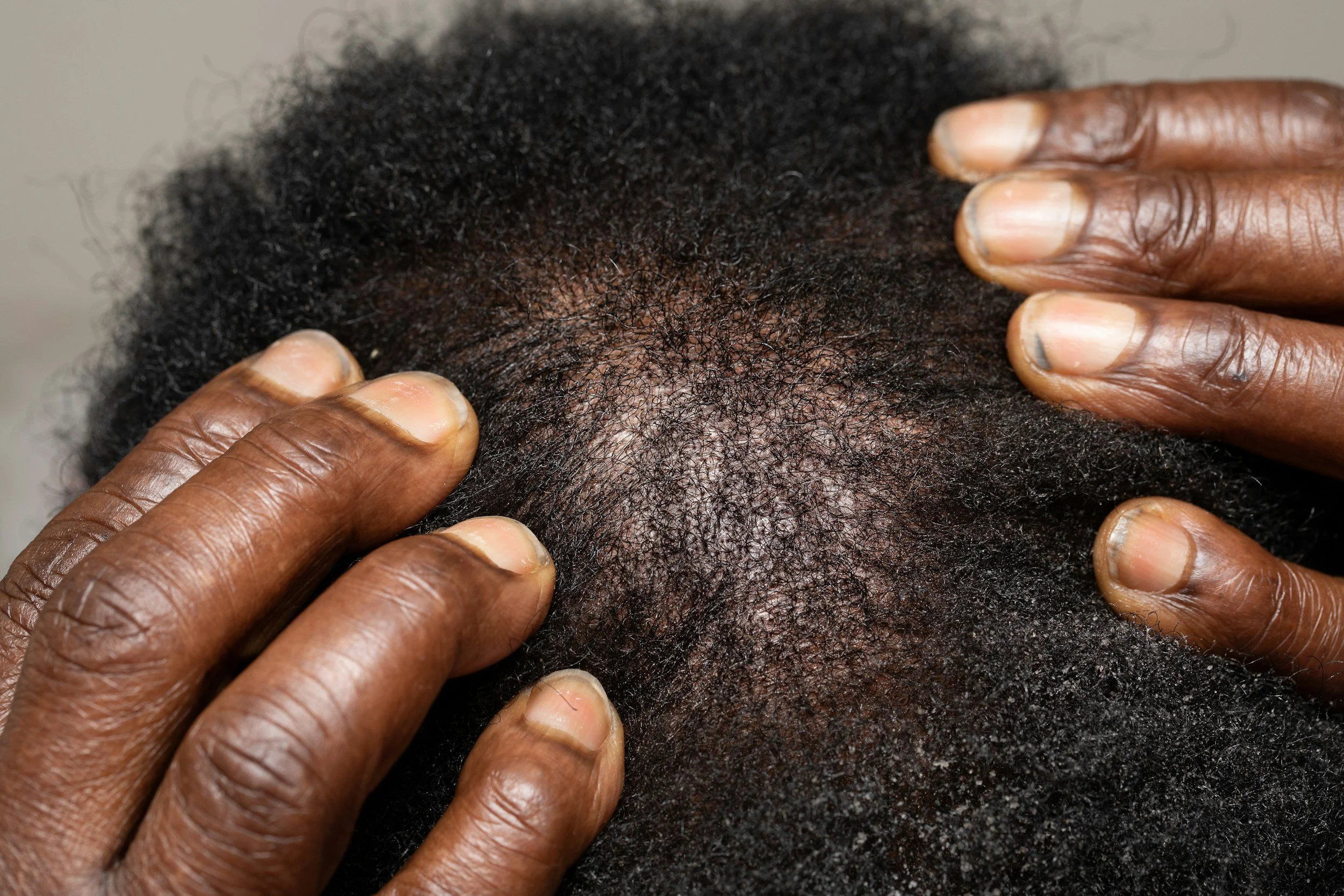
Central centrifugal cicatricial alopecia (CCCA): a scarring hair loss that begins at the crown and spreads outward, most commonly seen in women of African descent
Scalp conditions that affect hair: such as seborrheic dermatitis, scalp psoriasis, and fungal infections
Hair loss related to nutritional deficiencies, thyroid conditions, or hormonal changes
Hair loss and hair care in patients with textured hair
Hair loss in people with textured or coily hair can have unique causes and is sometimes overlooked or delayed in diagnosis. Dr. Quartey understands the importance of listening to your hair care practices and cultural styling needs, and she will work with you on a plan that respects your routine while protecting your hair health.
Signs it's time to schedule a visit
Thinning at the part, crown, or temples
A widening part or receding hairline
Noticeably more shedding than usual in the shower or on your brush
Round or irregular bald patches
Scalp itching, burning, pain, scaling, or tenderness
Hair breakage or thinning along the edges or hairline
Hair loss in children or teens
How we approach treatment
Treatment depends on the diagnosis. Dr. Quartey may recommend:
Topical treatments: such as minoxidil or prescription solutions and foams
Oral medications: for certain types of hair loss
Anti-inflammatory treatments: for inflammatory or scarring hair loss, including prescription topicals or injections into affected areas of the scalp [edit to reflect what you offer]
Treatment of underlying scalp conditions
Lab testing: when blood work is needed to check for nutritional deficiencies, thyroid problems, or hormonal causes
Hair care and styling guidance: to reduce damage and tension
Realistic expectations: most treatments take several months to show results, and we'll explain what to expect and how to measure progress
What to expect at your visit
A detailed history. We'll ask when the hair loss began, how it has changed, your hair care routine, medications and supplements, diet, recent illnesses or stressors, and family history.
A scalp and hair exam. Dr. Quartey will examine your scalp and may use a dermatoscope for a closer look at hair follicles. A gentle hair pull test may also be performed.
Testing if needed. This may include blood work or, in some cases, a small scalp biopsy to confirm the diagnosis.
A treatment plan. We'll walk through your options, including benefits, risks, and timelines.
Follow-up. Hair growth is slow, so regular check-ins help us track your progress and adjust treatment.
Helpful to bring: a list of your medications, vitamins, and supplements, along with the hair products you use. Photos of your hair from earlier years can also help us see how things have changed.
Frequently asked questions
Is hair loss normal?
Shedding some hair every day is normal, typically around 50 to 100 strands. If you notice a change in how much you're shedding, new thinning, or patches, it's worth getting evaluated.
Can hair loss be reversed?
It depends on the cause. Some types, such as stress-related shedding, often resolve on their own. Others can be slowed or partly reversed with treatment, especially when started early. Scarring forms of hair loss can't regrow hair that has already been lost, which is why early diagnosis is so important.
Can my hairstyle cause hair loss?
Yes. Styles that pull tightly on the hair, such as tight braids, ponytails, weaves, or extensions, can cause traction alopecia over time. If you're experiencing hair loss, we can discuss styles that are gentler on your hair.
How long does it take to see results?
Most hair loss treatments take at least three to six months before you notice improvement, and sometimes longer. Consistency is key.
Do you treat hair loss in children and teens?
Yes, we see patients of all ages.
Does insurance cover hair loss evaluation?
Evaluation of hair loss is typically considered a medical visit, though coverage for certain treatments varies by plan. Please call 240-813-8215 to confirm your coverage.
Are you accepting new patients?
Yes, we're currently accepting new patients.
Get answers about your hair loss
The sooner we find the cause, the more options you have. Book an appointment or call us at 240-813-8215.
Divergent Dermatology
19785 Crystal Rock Drive, Suite 208
Germantown, MD 20874
Serving Germantown, Gaithersburg, Clarksburg, Montgomery Village, and surrounding communities.